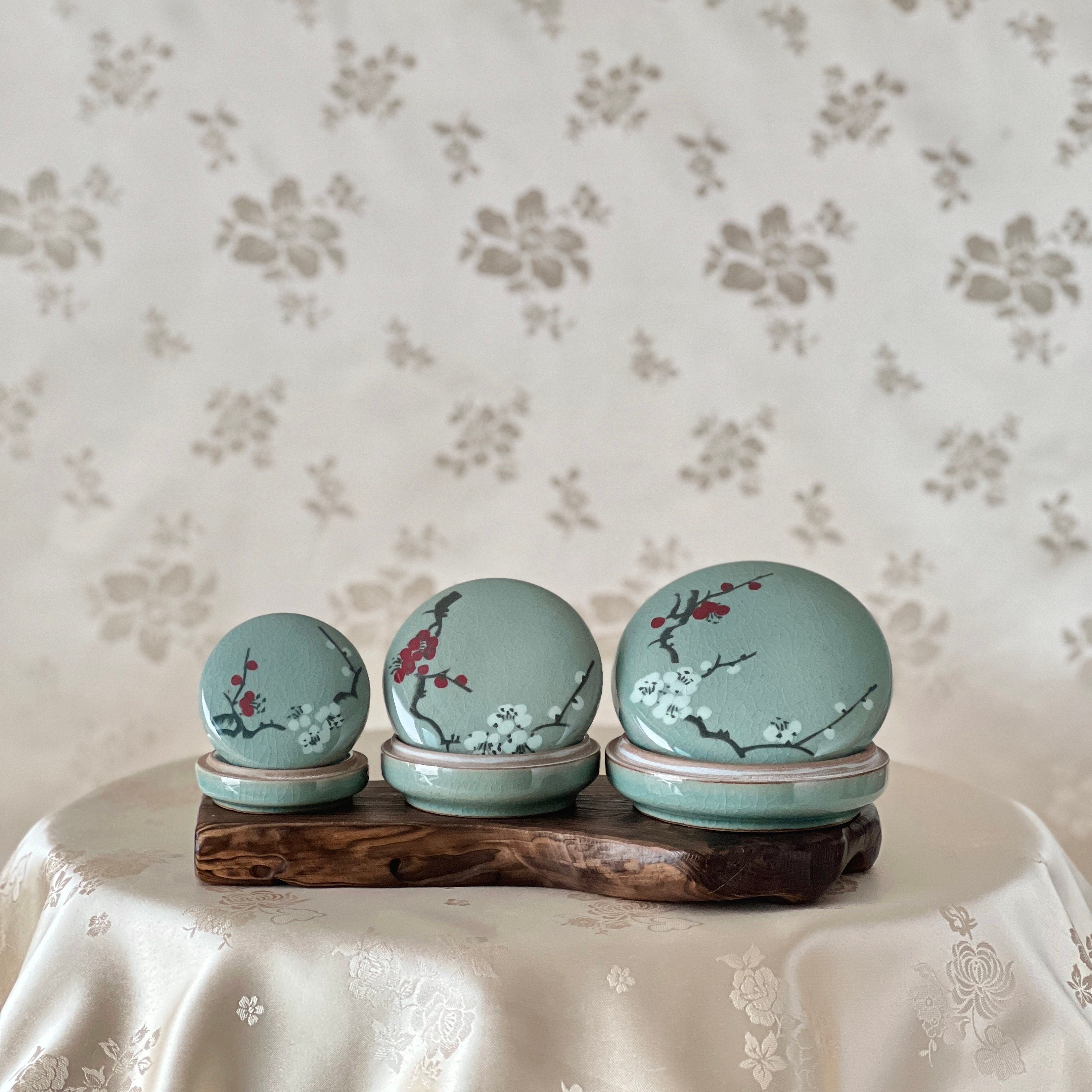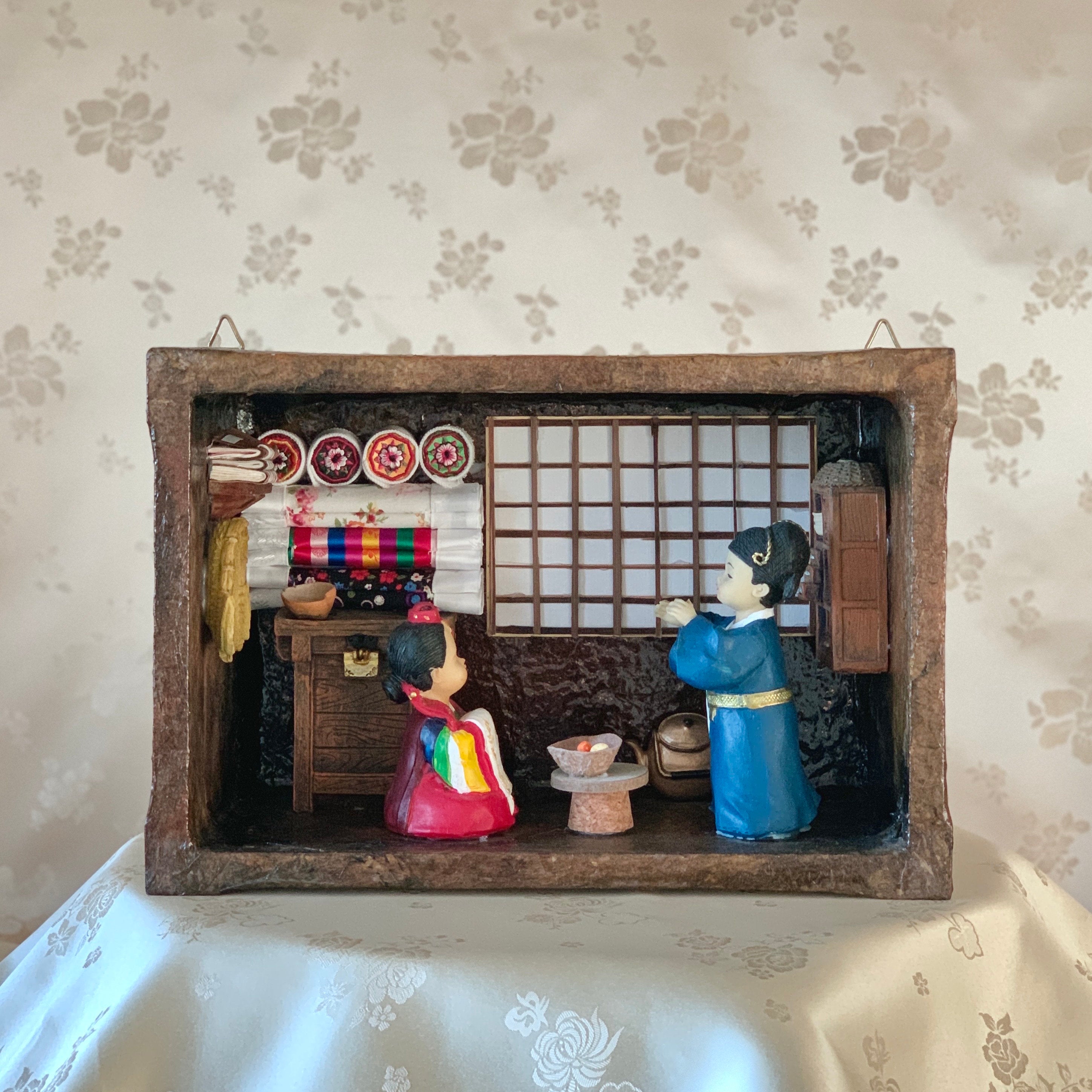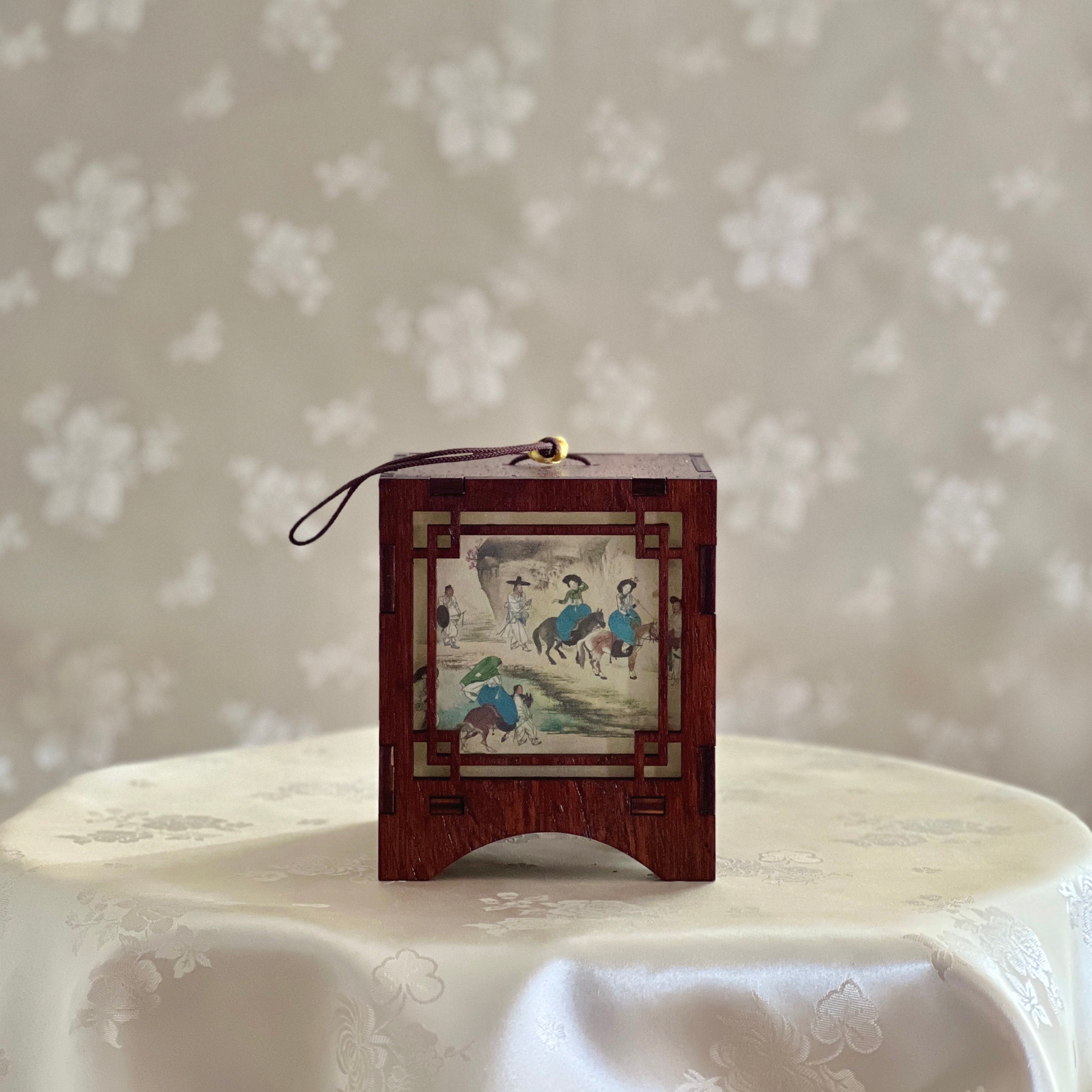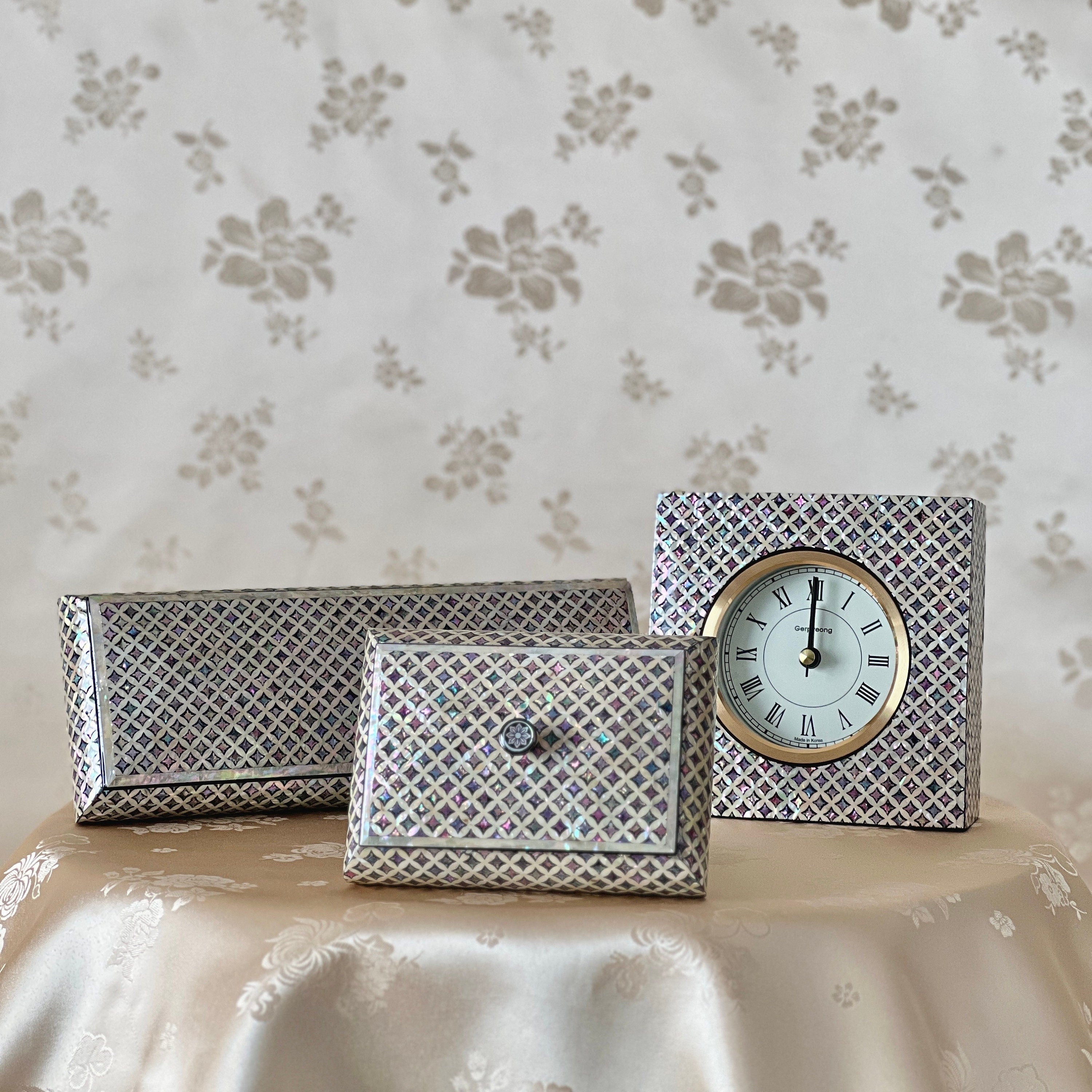


Besticktes Kunstpaneel: Joseon Königliches Drachenabzeichen (Yongbo), Schwarzer Rahmen
- Weltweiter Versand
- Geringer Lagerbestand – nur noch 1 Stück verfügbar
- Nachbestellt, bald verfügbar
Diejenigen, die sich für diese Arbeit entscheiden, schätzen historische Objekte nicht nur wegen der Symbole, die sie bewahren, sondern auch wegen der Art und Weise, wie eine Kontextänderung die Wahrnehmung dieser Symbole verändern kann.
„Der Drache wird nicht länger am Körper getragen; innerhalb des schwarzen Feldes ist er zu einem Bild geworden, dem man sich stellen muss.“
Dieses bestickte Panel präsentiert eineJoseon-Kaiserdrachen-Insignie oder Yongbo, die aus der visuellen Logik der Hofkleidung entfernt und als eigenständiges Kontemplationsobjekt neu gerahmt wurde. Ihre Transformation ist subtil, aber bedeutsam. Historisch gehörte eine gestickte Insignie zu einem Kleidungsstück, bewegte sich mit dem Träger und nahm an der zeremoniellen Sichtbarkeit des Ranges teil. Hier wurde das Rundell von diesem körperlichen Kontext getrennt und vor einem schwarzen Textilfeld innerhalb eines schwarzen Rahmens platziert. Autorität wird nicht länger durch Bewegung vermittelt. Sie wird stillgehalten.
Diese Stille verändert das Werk.
Das schwarze Umgebungsfeld schafft ein bewusstes Intervall zwischen dem gestickten Rundell und dem rechteckigen Rahmen. Das Auge nimmt zuerst die Dunkelheit wahr, dann die konzentrierte kreisförmige Form in ihrer Mitte. Dieser Kontrast etabliert zwei verschiedene Ordnungen: die strenge Geometrie des Rahmens und die in sich geschlossene, fast zentrifugale Energie des Drachens darin.
Das Rundell selbst ist um kontrollierte Bewegung herum konstruiert. Der Drache windet sich über das Feld, sein Kopf wird mit direkter Intensität präsentiert, während der Körper sich durch Wolken und ornamentale Formen dreht. Das Tier wirkt aktiv, doch der Kreis umschließt es vollständig. Diese Spannung zwischen Bewegung und Umschließung ist grundlegend für das Bild. Königliche Macht wird nicht als unkontrollierte Kraft dargestellt, sondern als Energie, die innerhalb der zeremoniellen Ordnung diszipliniert ist.
Der fünfklauige Drache trägt die erhabene Symbolik, die in der Ursprungstradition mit dem König identifiziert wird. Seine Bedeutung liegt nicht einfach im Tier selbst, sondern in der Präzision der Unterscheidung. In der Hofkultur von Joseon operierten königliche Bilder durch sorgfältig regulierte Zeichen, und die Anzahl der Klauen war Teil dieser visuellen Hierarchie. Der Drache kommuniziert Autorität daher durch Spezifität.
Die Stickerei übersetzt diese Autorität in Material.
Goldfarbenes Garn wird verwendet, um Schuppen, Klauen, Hörner, Wolkenformen und die winzigen linearen Details des Drachenkörpers zu konstruieren. Da Stickerei ein Bild durch angesammelten Faden statt durch gemalte Oberfläche aufbaut, besitzt das Motiv ein leichtes physisches Relief. Licht beleuchtet den Drachen nicht einfach; es fängt sich an der erhabenen Stickerei und verändert sich, wenn der Betrachter sich bewegt.
Vor dem schwarzen Montagegrund wird diese Reaktion auf Licht besonders ausgeprägt.
Die umgebende Dunkelheit erfüllt die entgegengesetzte Funktion der Stickerei. Wo der Faden reflektiert, absorbiert das schwarze Feld. Wo der Drache dicht mit Linien und Symbolen ist, ist die Montage fast vollständig ohne Bild. Die Rahmung wurde daher um ein Prinzip der visuellen Kompression und Freigabe herum komponiert: Komplexität im Zentrum, Ruhe drumherum.
Deshalb ist die Wahl von Schwarz besonders effektiv.
Eine reich gemusterte oder historisch nachahmende Umgebung hätte die dekorativen Assoziationen des ursprünglichen Hofkleidungsstücks verstärken können, hätte aber auch mit der Insignie konkurriert. Das schwarze Feld entfernt stattdessen den Kontext, um die Präsenz zu intensivieren. Es fordert das gestickte Abzeichen auf, für sich selbst zu stehen.
Der Rahmen führt eine zweite Transformation ein. Historisch gehörte der Yongbo zur Kleidung und wurde im Verhältnis zum menschlichen Körper verstanden. Seine Größe, Position und Bedeutung wurden durch das Tragen aktiviert. Innerhalb eines rechteckigen Rahmens nimmt das Rundell jedoch ein architektonisches statt ein körperliches Feld ein. Der Betrachter steht ihm gegenüber, anstatt neben seinem Träger.
Die Beziehung ändert sich von der Anerkennung des Rangs zur Kontemplation des Symbols.
Diese Verschiebung löscht die höfische Geschichte des Werks nicht aus. Im Gegenteil, sie ermöglicht es dem symbolischen System, sichtbarer zu werden. Die kreisförmige Form, der fünfklauige Drache, die umgebenden Wolken und die konzentrierte metallische Stickerei können nun unabhängig von der Kleidungsherstellung untersucht werden. Was einst sofort den Status in einer zeremoniellen Umgebung kommunizierte, kann nun langsam gelesen werden.
Die drei fotografierten Variationen machen diese Beziehung zwischen konstanter Struktur und wechselnder Farbe besonders deutlich. Das Rundell kann vor einem helleren, tiefblauen oder braun-violetten Textilgrund erscheinen, was die Wirkung der Goldstickerei verändert. Auf dem helleren Grund werden Linien und Stiche besonders gut lesbar. Vor Blau wirkt das Gold strahlender und formeller. Vor Braun-Violett wird die tonale Beziehung ruhiger und gedämpfter. Doch die schwarze Montage und der schwarze Rahmen bleiben konstant und verleihen der Serie eine gemeinsame visuelle Disziplin.
Der gewellte Rand des Rundells vermittelt zusätzlich zwischen Bewegung und Eingrenzung. Seine wiederholten Kurven mildern die Grenze der Insignie, während sie ihre kreisförmige Integrität bewahren. Im Inneren bewegen sich Wolken um den Drachen in einem kontinuierlichen Feld. Jenseits dieser Grenze ist der schwarze Grund jedoch still.
Die Grenze ist daher wichtig.
Darin: Rang, Bewegung, Symbol und Zeremonie.
Draußen: Stille.
Diese Unterscheidung erklärt die Wirksamkeit des Werks als gerahmte Kunst. Das historische Emblem wurde nicht einfach vergrößert oder zur Ausstellung dekoriert. Stattdessen wurde seine ursprüngliche Konzentration bewahrt, während die Umgebung reduziert wurde. Das Ergebnis lässt die symbolische Dichte des Yongbo deutlicher hervortreten.
Aus der Ferne betrachtet, wird das Panel durch eine einzige leuchtende kreisförmige Präsenz definiert, die in schwarzer Geometrie gehalten wird. Näher betrachtet, zerfällt diese Einheit in Stickerei: Schuppen werden zu einzelnen Stichen; Wolken werden zu Fadenlinien; der Körper des Drachens wird zu einer Ansammlung winziger Entscheidungen. Autorität, die zunächst als Bild wahrgenommen wird, wird allmählich zu Arbeit.
Dieser Übergang ist wichtig.
Hofinsignien kommunizierten sofort Hierarchie, aber Stickerei erforderte geduldige, repetitive Arbeit, um diese Unmittelbarkeit zu ermöglichen. Das gerahmte Panel enthält daher zwei Formen der Disziplin gleichzeitig: die zeremonielle Disziplin der königlichen Symbolik und die manuelle Disziplin der Textilherstellung.
Die schwarze Umgebung gibt beiden Raum, um gesehen zu werden.
Übrig bleibt ein Objekt, das zwischen seiner früheren Funktion und seinem gegenwärtigen Zustand schwebt. Es ist nicht länger Teil eines Kleidungsstücks, behält aber die visuelle Grammatik der Hofkleidung bei. Es identifiziert keinen Träger mehr, trägt aber weiterhin die Erinnerung an Rang. Sein Drache bewegt sich nicht mehr durch Zeremonie, doch sein gewundener Körper birgt immer noch die Energie des Befehls.
Innerhalb des schwarzen Rahmens hat der Yongbo seine Autorität nicht verloren.
Er hat einfach die Proklamation gegen Stille getauscht.
Abmessungen
-
Rahmen
Breite: 38,3 cm (15,08 Zoll)
Höhe: 48,5 cm (19,09 Zoll)
Tiefe: 4,3 cm (1,69 Zoll) -
Dracheninsignien (Yongbo)
Breite: 30 cm (11,81 Zoll)
Höhe: 30 cm (11,81 Zoll)
Verwandte Links
Wir versenden weltweit. Im Folgenden finden Sie die Allgemeinen Geschäftsbedingungen, die unsere Versandrichtlinien bilden.
Artinko Produkte: Pflege und Authentizität
Alle über die Website bereitgestellten Informationen dienen zu Informationszwecken bezüglich der Geschichte und Pflege traditioneller koreanischer Handwerkskunst. Obwohl wir 100% authentische Materialien garantieren, ist Artinko nicht verantwortlich für Schäden, die durch unsachgemäße Handhabung entstehen, wie die Verwendung von nicht lebensmittelechten Dekorationsartikeln zum Essen oder die Verwendung aggressiver Chemikalien auf empfindlichen Perlmutt-Oberflächen.
Abschnitt 13: Unsere Liefergarantie
Im Gegensatz zu Standardvorlagen übernimmt Artinko die volle Verantwortung für Ihre Bestellung, bis sie sicher in Ihren Händen ist. Wir verstehen die zerbrechliche Natur traditioneller koreanischer Keramik und Lackkunst. In dem seltenen Fall, dass ein Artikel während des Transports beschädigt wird oder verloren geht, senden wir den Artikel ohne zusätzliche Kosten erneut an Sie oder erstatten den vollen Betrag sofort nach Überprüfung des Schadens zurück.
Rücksendungen & Rückerstattungen
-
14-Tage Rückgaberecht: Ware kann innerhalb von 14 Tagen nach Erhalt zurückgegeben oder umgetauscht werden, wenn das Produkt nicht geöffnet oder benutzt wurde und sich in der Originalverpackung befindet.
-
Vorgehensweise: Um eine Rücksendung zu initiieren oder ein Versandproblem zu melden, kontaktieren Sie uns bitte unter contact@artinko.com.
-
Umtausch: Wir ersetzen Artikel nur, wenn sie defekt oder beschädigt sind.
Bearbeitungszeit für den Versand
- Alle Bestellungen werden innerhalb von 5 Tagen nach Zahlungseingang bearbeitet. Bestellungen werden nicht an Wochenenden und Feiertagen versandt.
- Wenn wir ein hohes Bestellaufkommen haben, können sich die Lieferungen um einige Tage verzögern. Wir werden Sie per E-Mail kontaktieren, falls es zu einer Verzögerung beim Versand Ihrer Bestellung kommt.
Versandkosten und Lieferzeiten
- Alle Bestellungen werden per K-Packet, Luftpost, EMS, Expresskurier (UPS, Fedex, DHL usw.) versandt.
- K-Packet Versand ist der Basisservice. Die geschätzte Lieferzeit für K-Packet beträgt 14-21 Tage, abhängig von Ihrer Region. Wenn das Gewicht über 2 kg liegt, wird der K-Packet-Service in Luftpost umgewandelt.
- Die geschätzte Lieferzeit für EMS beträgt 7-14 Tage, abhängig von Ihrer Region. Bitte beachten Sie, dass die Luftpostversandmethode möglicherweise nicht für alle Länder verfügbar ist.
- Die geschätzte Lieferzeit für Expresskurier beträgt 5-10 Tage.
- Die Versandkosten für Ihre Bestellung werden an der Kasse berechnet und angezeigt.
- Pakete werden, wo immer möglich, verfolgt versandt, und Sie erhalten eine automatische E-Mail mit einer Sendungsverfolgungsnummer, sobald Ihre Bestellung bearbeitet wurde.
Versand an Postfächer
- Wir versenden an Postfächer.
Versandbestätigung und Sendungsverfolgung
- Sie erhalten eine Versandbestätigungs-E-Mail mit einer Sendungsverfolgungsnummer, sobald Ihre Bestellung versandt wurde.
Schäden
- Wir verpacken unsere Artikel mit größter Sorgfalt, um sicherzustellen, dass sie den Transport überstehen. Im seltenen Fall von Schäden kontaktieren Sie uns bitte umgehend mit einem Foto, und wir werden gemeinsam mit Ihnen eine Lösung finden.
Zollgebühren
- Bitte beachten Sie, dass Ihr Paket bei der Ankunft möglicherweise den Zollbestimmungen Ihres Landes unterliegt. Die Zollgebühren liegen in der Verantwortung des Empfängers. Nur für US-Kunden: wir übernehmen Ihre Zollgebühren!
- Bitte beachten Sie, dass wir keinen Einfluss auf diese Gebühren haben. Die Lieferzeit kann sich auch verzögern, wenn der lokale Zoll Ihr Paket für längere Zeit festhält.
Wenn Sie Probleme mit der Lieferung haben, senden Sie uns bitte eine E-Mail an contact@artinko.com