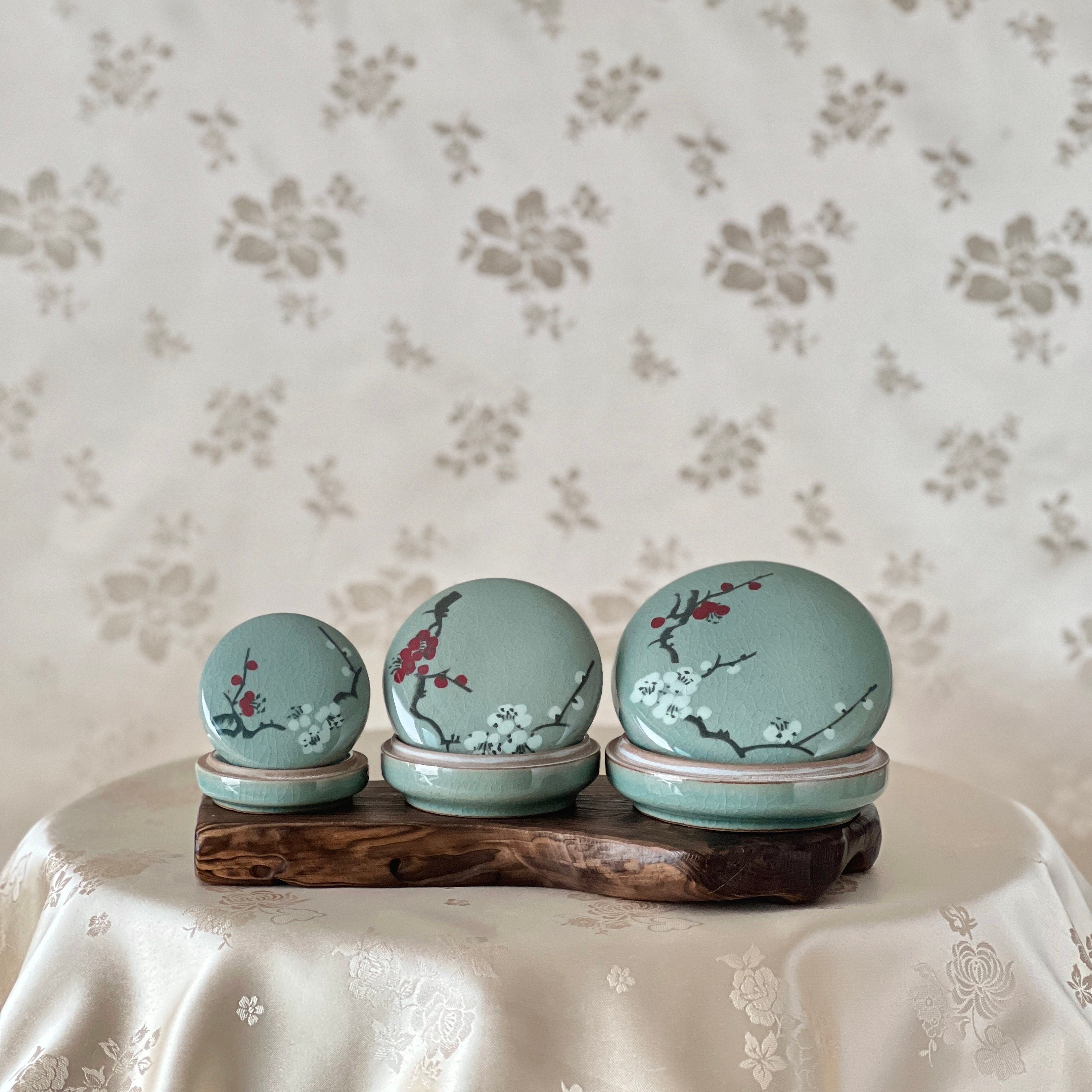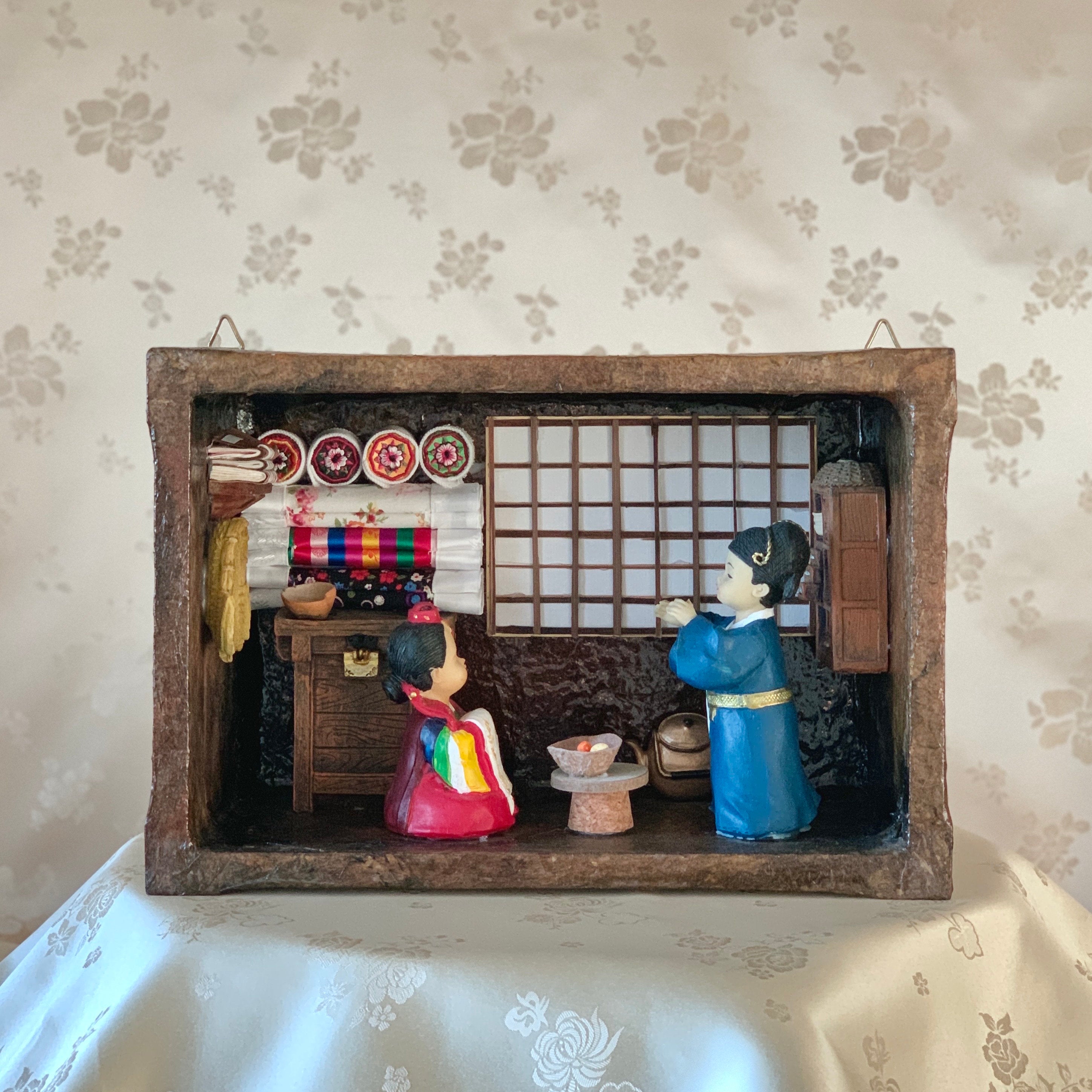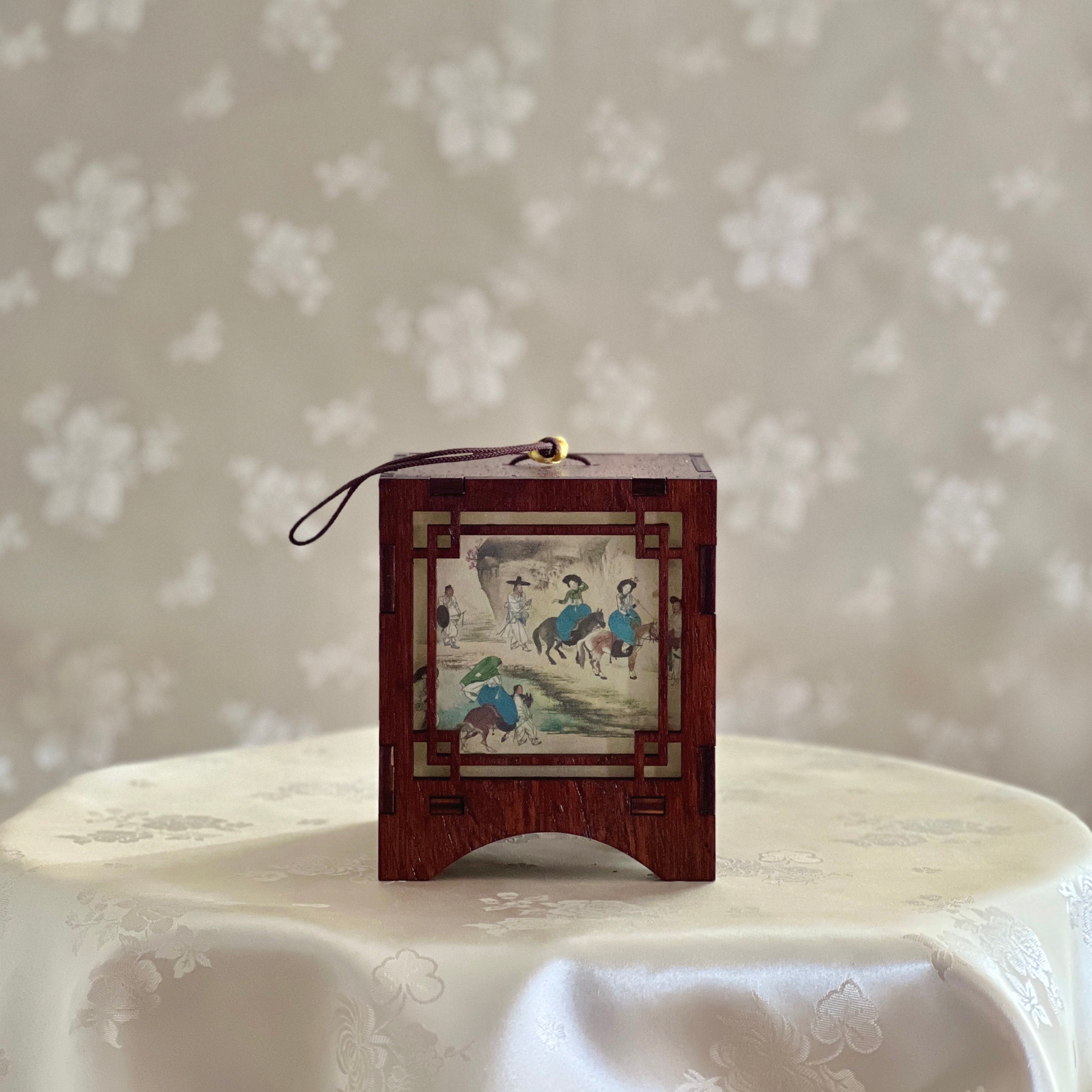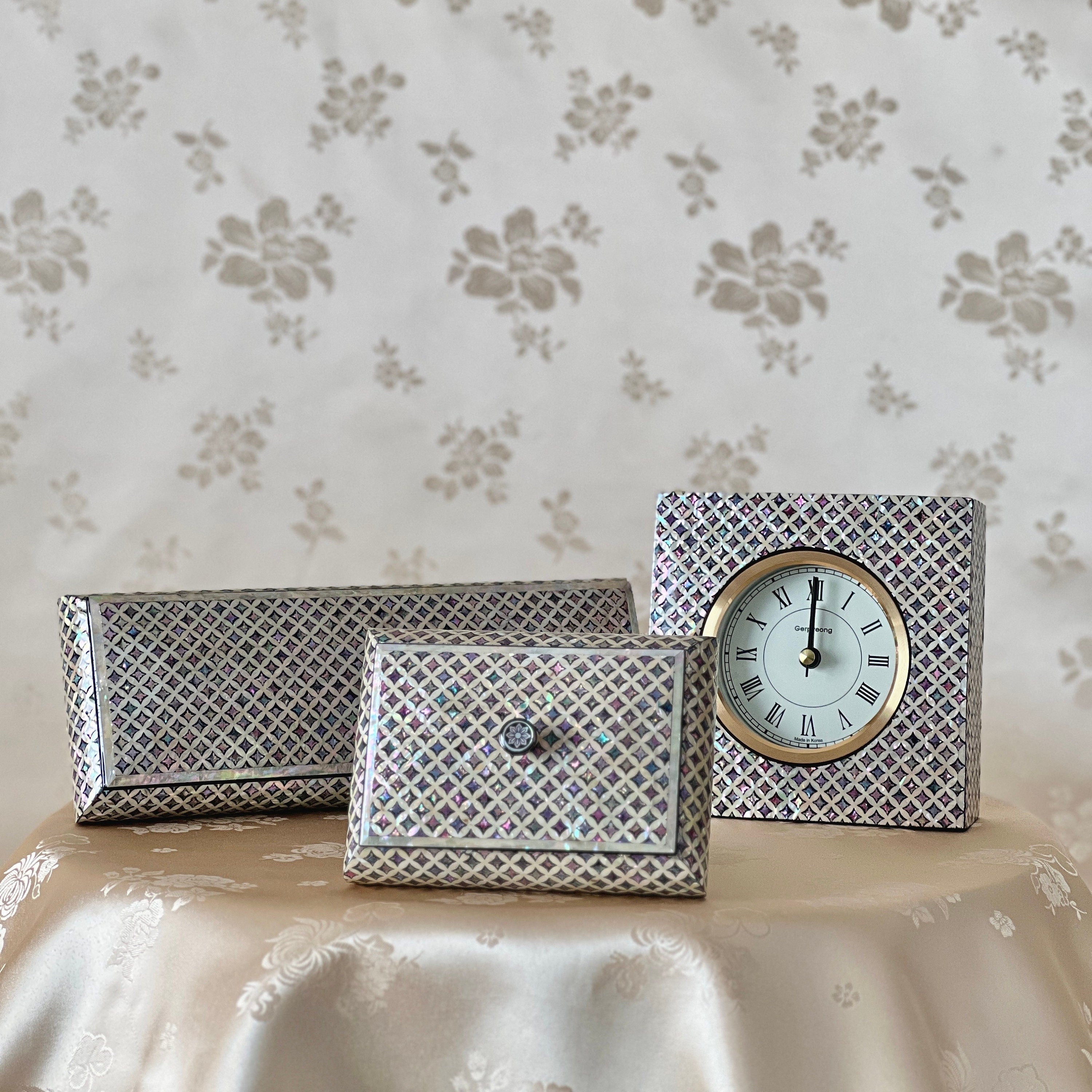


Celadon Großformatiges Dreier-Gefäß mit durchbrochenem Dekor: Päonienmotiv in Weiß-Slip-Sgraffito (Bakji)
- Weltweiter Versand
- Geringer Lagerbestand – nur noch 2 Artikel verfügbar
- Nachbestellt, bald verfügbar
Dieses Trio wird von denen gewählt, die verstehen, dass Harmonie oft nicht durch Gleichartigkeit entsteht, sondern durch die sorgfältige Kalibrierung von Unterschieden.
„Wie drei Pfingstrosen, die sich in verschiedenen Tempi entfalten, sammeln, erheben und öffnen sich die Gefäße im selben Feld aus Seladonlicht.“
In dieser dreiteiligen Komposition des Icheon-Keramikkünstlers Lee Sang-bong wird die Pfingstrose nicht als ornamentales Motiv behandelt, das auf eine fertige Form aufgebracht wird. Sie bestimmt die eigentliche Logik der Gefäße. Blüte, Blatt, Leerraum und Silhouette werden in ein strukturelles System gebracht, so dass die Blumenmotive scheinbar durch den Keramikkörper wachsen, anstatt nur über ihn hinweg.
Diese Unterscheidung ist wesentlich für das Verständnis des Trios.
Alle drei Gefäße teilen die gleiche visuelle Sprache, doch ihre Körper wurden bewusst variiert. Eines nimmt die konzentrierte Fülle einer Blütenknospe an, wobei sich die Form nach innen zur oberen Kante hin zieht. Das hohe zentrale Gefäß führt eine deutlich andere vertikale Energie ein: Sein langer Hals erhebt sich über die umgebenden Körper und schafft eine Achse, um die sich die beiden anderen Formen zu sammeln scheinen. Das breitere Gefäß dehnt sich lateral aus und verleiht dem unteren Register des Ensembles mehr Gewicht.
Zusammen betrachtet, bilden die drei eine Abfolge von Kompression, Aufstieg und Expansion.
Die Komposition wurde auf diese Weise arrangiert, um zu verhindern, dass das Trio als drei Versionen eines Objekts gelesen wird. Stattdessen erfüllt jedes Gefäß eine andere räumliche Rolle. Das zentrale Stück lenkt den Blick nach oben. Die abgerundeten Begleiter halten ihn näher am Boden. Ihre unterschiedlichen Höhen und Breiten erzeugen einen dreieckigen Rhythmus, während die gemeinsame Farbe, das Motiv und die durchbrochenen Oberflächen die Einheit bewahren.
Die Pfingstrose sorgt für die symbolische und visuelle Kontinuität, die dieser Asymmetrie ein Gefühl der Auflösung verleiht. In der koreanischen Kultur ist die Pfingstrose seit langem mit Wohlstand, Würde und Überfluss verbunden. Ihre geschichteten Blütenblätter eignen sich auf natürliche Weise für eine Darstellungsform, in der die Fülle im Mittelpunkt steht. Hier bedeutet Überfluss jedoch nicht einfachen visuellen Überschuss. Der Künstler hat dichte Blumenoberflächen mit Bereichen der Abwesenheit ausgeglichen, so dass die Blume sowohl durch das, was entfernt wurde, als auch durch das, was bleibt, verstanden werden kann.
Durchbruchsarbeiten erfüllen daher sowohl eine visuelle als auch eine strukturelle Funktion.
Die durchbrochenen Bereiche erzeugen Dunkelheit hinter der Seladon-Oberfläche und verleihen einer ansonsten durchgehenden Keramikwand Tiefe. Blätter scheinen sich zu überlappen. Stiele scheinen hinter Blüten zu verlaufen. Blütenblätter bewegen sich zwischen Oberfläche und Leere. Da diese Öffnungen unregelmäßig gemäß der botanischen Komposition und nicht einem wiederholten geometrischen Raster verteilt sind, vermitteln sie den Gefäßen den Eindruck, von wachsendem Blattwerk bewohnt zu sein.
Doch eine solche scheinbare Natürlichkeit erfordert beträchtliches Kalkül.
Jeder entfernte Abschnitt reduziert die durchgehende Festigkeit des Keramikkörpers. Bei Arbeiten dieser Größenordnung muss der Künstler genügend tragendes Material beibehalten, damit das Gefäß während des Trocknens und Brennens stabil bleibt. Die Beziehung zwischen durchbrochenen und undurchbrochenen Bereichen kann daher nicht willkürlich sein. Was organisch aussieht, muss immer noch struktureller Disziplin gehorchen.
Diese Spannung zwischen Freiheit und Kontrolle ist eine der bedeutendsten Eigenschaften des Trios. Die Blätter scheinen sich natürlich auszubreiten, aber ihre Anordnung muss das Gefäß schützen. Die Pfingstrosen wirken üppig, aber ihre Dichte muss proportional bleiben. Der Negativraum wirkt spontan, muss aber kalkuliert werden.
Die Bakji-Oberflächenbehandlung erweitert dieselbe Spannung auf die Haut des Objekts. Nach der Formgebung wird eine weiße Engobe auf den Keramikkörper aufgetragen. Die Oberfläche wird dann selektiv abgekratzt und bearbeitet, so dass die Pfingstrosenmotive durch Kontrast lesbar werden. Der Prozess erfordert zwei Eigenschaften, die in vollendetem Handwerk selten getrennt werden: akribische Präzision und den Mut, Material entschieden zu entfernen.
Die weißen Passagen hellen die Dekoration nicht einfach auf. Sie verändern die Wahrnehmung des Seladons selbst. Gegen die blassen Blumenbereiche erscheint der blaugrüne Grund tiefer und mineralischer. Gegen offene Perforationen erscheint er heller und transparenter. Die Beziehung zwischen weißer Engobe, Seladon-Glasur und innerem Schatten ermöglicht es, dass dieselbe Farbe auf der Oberfläche unterschiedlich wirkt.
Feine lineare Arbeiten artikulieren die Pfingstrosen weiter. Blütenblattadern und Blattstrukturen wurden zurückhaltend gezeichnet, was den Blüten Definition verleiht, ohne sie zu Illustrationen zu reduzieren. Kleine rötliche Akzente tauchen sporadisch durch das Blattwerk auf und bringen kurze Momente der Wärme in ein ansonsten kühles chromatisches Feld. Da diese Farbpunkte spärlich sind, fungieren sie fast als Pausen im größeren Rhythmus.
Den Rändern ist besondere Aufmerksamkeit zu schenken. Keines endet in einer scharfen horizontalen Linie. Ihre leicht gewellten Kanten erinnern an die Kontur von Blütenblättern und lassen das botanische Thema die Architektur des Gefäßes selbst verändern. Dies ist eine kleine, aber wichtige Entscheidung: Die Pfingstrose ist nicht auf die Dekoration darunter beschränkt. Ihre Logik reicht bis zur Grenze der Form.
Die drei Stücke verändern sich auch gegenseitig durch ihre Nähe. Der kompakte Körper neben dem hohen Gefäß wirkt aufgrund der zentralen Vertikalen voller. Der zentrale Hals wirkt schlanker, weil er zwischen breiteren Massen aufragt. Der breiteste Körper wirkt als Gegengewicht und stellt die visuelle Stabilität der Gruppe wieder her.
Deshalb sollte das Trio als eine einzige räumliche Komposition und nicht als drei unabhängige Gefäße gelesen werden, die zufällig zusammengebracht wurden. Ihre individuellen Proportionen haben Bedeutung in Bezug zueinander.
Während sich der Betrachter um die Gruppe bewegt, ändert sich diese Beziehung ständig. Die hohe Form kann einen Teil eines abgerundeten Gefäßes vorübergehend verdecken. Durchbrüche einer Oberfläche können sich visuell mit den Öffnungen einer anderen ausrichten. Blüten überlappen sich über separate Objekte hinweg. Aus bestimmten Blickwinkeln erscheinen die drei Körper fast durchgehend; aus anderen werden die Zwischenräume zwischen ihnen so wichtig wie die Gefäße selbst.
Der leere Raum zwischen den Werken spielt somit eine ähnliche Rolle wie die durchbrochenen Räume in ihnen.
Beide schaffen Atem.
Diese Korrespondenz verleiht dem Trio einen besonders kohärenten Charakter. Innerhalb jedes Gefäßes ist Ton gegen Abwesenheit ausgewogen. Im gesamten Ensemble ist Volumen gegen Intervall ausgewogen. Auf der Oberfläche ist weiße Engobe gegen Seladon ausgewogen. In der Silhouette ist abgerundete Fülle gegen vertikalen Aufstieg ausgewogen.
Das Werk beruht letztendlich auf diesen Beziehungen und nicht nur auf dekorativer Fülle.
Lee Sang-bongs Trio verwandelt die Pfingstrose von einem Motiv in ein strukturelles Prinzip: etwas, das nicht nur auf der Oberfläche, sondern durch Form, Leere, Proportion und Gruppierung erblüht. Die drei Gefäße stehen mit der stillen Gewissheit von Objekten zusammen, die nicht übereinstimmen müssen, um zueinander zu gehören.
Ihre Harmonie liegt präzise in ihren Unterschieden.
Maße
-
Höhe: 24 cm (9,45 Zoll)
Durchmesser: 25 cm (9,84 Zoll) -
Höhe: 36 cm (14,71 Zoll)
Durchmesser: 20 cm (7,87 Zoll) -
Höhe: 20 cm (7,87 Zoll)
Durchmesser: 28 cm (11,02 Zoll)
Verwandte Links
Wir versenden weltweit. Im Folgenden finden Sie die Allgemeinen Geschäftsbedingungen, die unsere Versandrichtlinien bilden.
Artinko Produkte: Pflege und Authentizität
Alle über die Website bereitgestellten Informationen dienen zu Informationszwecken bezüglich der Geschichte und Pflege traditioneller koreanischer Handwerkskunst. Obwohl wir 100% authentische Materialien garantieren, ist Artinko nicht verantwortlich für Schäden, die durch unsachgemäße Handhabung entstehen, wie die Verwendung von nicht lebensmittelechten Dekorationsartikeln zum Essen oder die Verwendung aggressiver Chemikalien auf empfindlichen Perlmutt-Oberflächen.
Abschnitt 13: Unsere Liefergarantie
Im Gegensatz zu Standardvorlagen übernimmt Artinko die volle Verantwortung für Ihre Bestellung, bis sie sicher in Ihren Händen ist. Wir verstehen die zerbrechliche Natur traditioneller koreanischer Keramik und Lackkunst. In dem seltenen Fall, dass ein Artikel während des Transports beschädigt wird oder verloren geht, senden wir den Artikel ohne zusätzliche Kosten erneut an Sie oder erstatten den vollen Betrag sofort nach Überprüfung des Schadens zurück.
Rücksendungen & Rückerstattungen
-
14-Tage Rückgaberecht: Ware kann innerhalb von 14 Tagen nach Erhalt zurückgegeben oder umgetauscht werden, wenn das Produkt nicht geöffnet oder benutzt wurde und sich in der Originalverpackung befindet.
-
Vorgehensweise: Um eine Rücksendung zu initiieren oder ein Versandproblem zu melden, kontaktieren Sie uns bitte unter contact@artinko.com.
-
Umtausch: Wir ersetzen Artikel nur, wenn sie defekt oder beschädigt sind.
Bearbeitungszeit für den Versand
- Alle Bestellungen werden innerhalb von 5 Tagen nach Zahlungseingang bearbeitet. Bestellungen werden nicht an Wochenenden und Feiertagen versandt.
- Wenn wir ein hohes Bestellaufkommen haben, können sich die Lieferungen um einige Tage verzögern. Wir werden Sie per E-Mail kontaktieren, falls es zu einer Verzögerung beim Versand Ihrer Bestellung kommt.
Versandkosten und Lieferzeiten
- Alle Bestellungen werden per K-Packet, Luftpost, EMS, Expresskurier (UPS, Fedex, DHL usw.) versandt.
- K-Packet Versand ist der Basisservice. Die geschätzte Lieferzeit für K-Packet beträgt 14-21 Tage, abhängig von Ihrer Region. Wenn das Gewicht über 2 kg liegt, wird der K-Packet-Service in Luftpost umgewandelt.
- Die geschätzte Lieferzeit für EMS beträgt 7-14 Tage, abhängig von Ihrer Region. Bitte beachten Sie, dass die Luftpostversandmethode möglicherweise nicht für alle Länder verfügbar ist.
- Die geschätzte Lieferzeit für Expresskurier beträgt 5-10 Tage.
- Die Versandkosten für Ihre Bestellung werden an der Kasse berechnet und angezeigt.
- Pakete werden, wo immer möglich, verfolgt versandt, und Sie erhalten eine automatische E-Mail mit einer Sendungsverfolgungsnummer, sobald Ihre Bestellung bearbeitet wurde.
Versand an Postfächer
- Wir versenden an Postfächer.
Versandbestätigung und Sendungsverfolgung
- Sie erhalten eine Versandbestätigungs-E-Mail mit einer Sendungsverfolgungsnummer, sobald Ihre Bestellung versandt wurde.
Schäden
- Wir verpacken unsere Artikel mit größter Sorgfalt, um sicherzustellen, dass sie den Transport überstehen. Im seltenen Fall von Schäden kontaktieren Sie uns bitte umgehend mit einem Foto, und wir werden gemeinsam mit Ihnen eine Lösung finden.
Zollgebühren
- Bitte beachten Sie, dass Ihr Paket bei der Ankunft möglicherweise den Zollbestimmungen Ihres Landes unterliegt. Die Zollgebühren liegen in der Verantwortung des Empfängers. Nur für US-Kunden: wir übernehmen Ihre Zollgebühren!
- Bitte beachten Sie, dass wir keinen Einfluss auf diese Gebühren haben. Die Lieferzeit kann sich auch verzögern, wenn der lokale Zoll Ihr Paket für längere Zeit festhält.
Wenn Sie Probleme mit der Lieferung haben, senden Sie uns bitte eine E-Mail an contact@artinko.com