The Paper That Outlives History: Why Korean Hanji Lasts Forever

Introduction: A Promise of Eternity
There is an old Korean proverb that whispers a truth known only to master artisans:
"Paper lasts for a thousand years; silk lasts for five hundred."
In our modern world, we are used to paper that yellows, crumbles, and fades within a single lifetime. We think of paper as fragile—something to be discarded. But in Korea, paper (Hanji) was never merely a tool for writing; it was a vessel for eternity.
From the ancient archives of the Joseon Dynasty, which remain pristine to this day, to the very windows of traditional Hanok homes, Hanji is a testament to resilience. But what makes this "Paper of the Morning Calm" superior to the wood-pulp paper we use today?
The answer lies in the bark of the Mulberry tree and the soul of the artisan.
1. The Material: The Inner Strength of the Mulberry (Dak)
Regular paper is often a mass-produced mix of wood pulp, acidic chemicals, and fillers. It is born from a harsh industrial process that breaks fibers down.
Hanji, however, is born from the Paper Mulberry tree (Dak). Specifically, it is made from the silky, resilient inner bark harvested in the dead of winter. These fibers are incredibly long, tough, and naturally resistant to decay. Unlike the short, brittle fibers of Western paper, Mulberry fibers are like muscle—flexible yet unbreakable.
2. The Architecture: A Web of Strength
If you tear a sheet of regular notebook paper, it rips easily in a straight line. This is because modern machines align fibers in a single direction (the "grain").
Hanji is different. During the traditional formation process (called We-bal), the artisan dips a bamboo screen into the water and rocks it rhythmically side-to-side and front-to-back. This causes the long Mulberry fibers to tangle and weave together in a chaotic, interlocking criss-cross pattern.
The result? A sheet of paper with no "weak direction."
It is so strong that ancient Koreans didn't just write on it—they built with it. They crafted water-resistant basins, shoes, and even Jigap (Paper Armor), which was tough enough to stop arrows.
3. The Breath: A Living Material
Perhaps the most poetic difference is that Hanji "breathes."
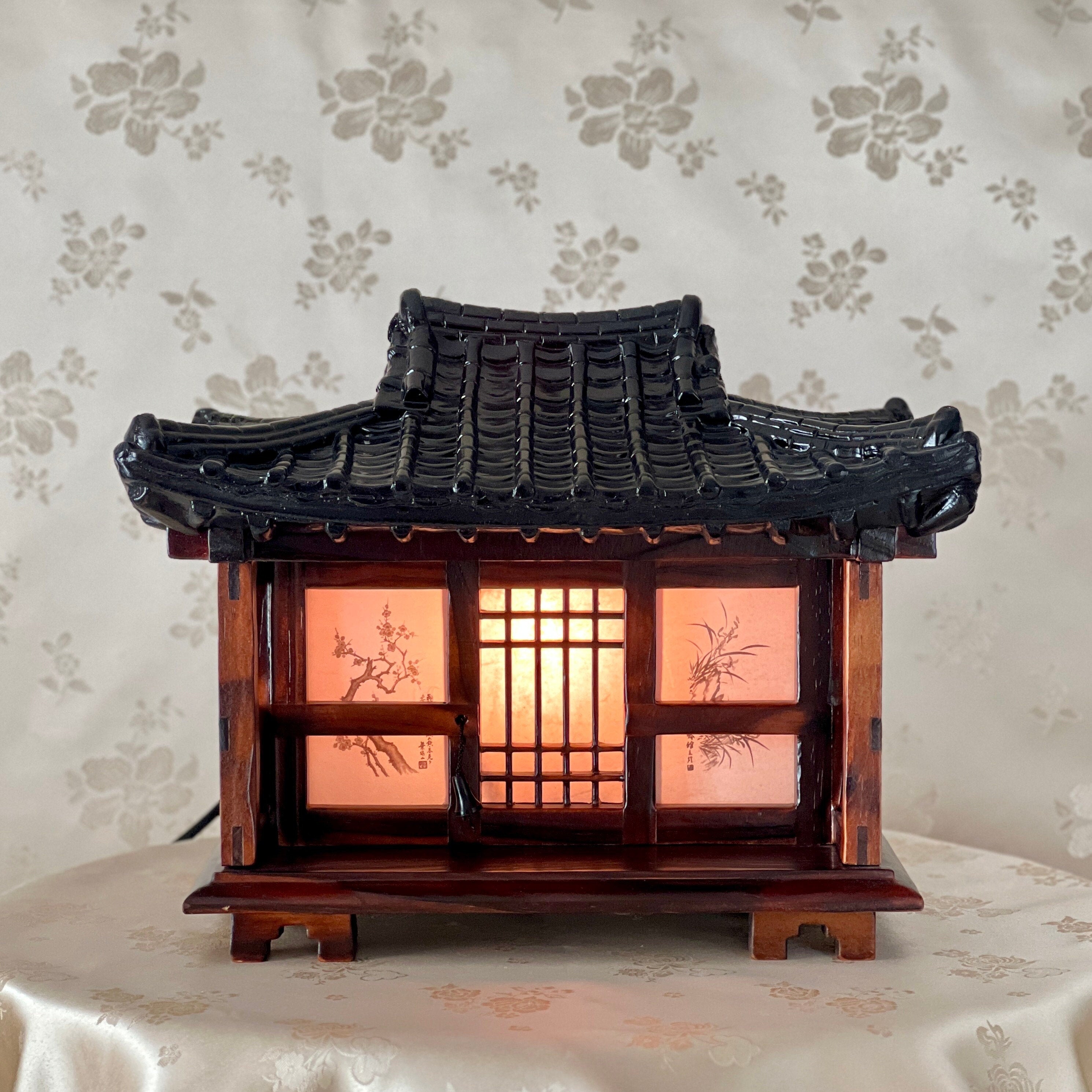
While modern paper suffocates under glass or plastic, Hanji has microscopic pores that allow air and moisture to flow through while trapping heat. This is why it was used for Changhoji (door and window paper). It acts as a natural air filter, keeping a room warm in winter and cool in summer, regulating humidity like a living skin.
Furthermore, Hanji is PH Neutral (Alkaline).
Modern paper is acidic; it eats itself alive over time (which is why old books turn yellow and brittle). Hanji, prepared with natural lye, remains neutral. It does not discolor. A poem written on Hanji today will look exactly the same to your great-grandchildren’s great-grandchildren.
Conclusion: Owning a Piece of History
To write on Hanji, or to own a craft made from it, is to participate in a legacy of patience. It is a rejection of the "throwaway" culture of the modern world in favor of something built to last.
Whether it is a lamp that glows with a warm, diffused light, or a notebook waiting for a poem that will never fade, Hanji reminds us that true quality is timeless.
Explore our collection of lamps made with Hanji, and experience the touch of history.